HERMOSA BEACH, California – I lived a patently Dickensian beach volleyball experience these past two days.
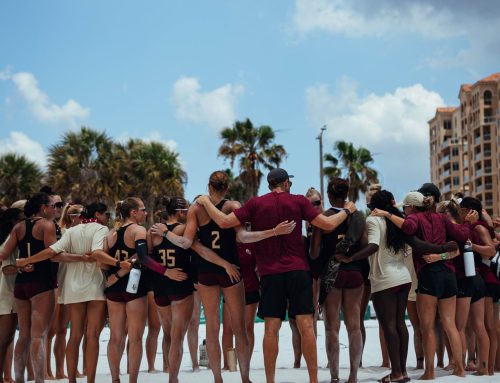
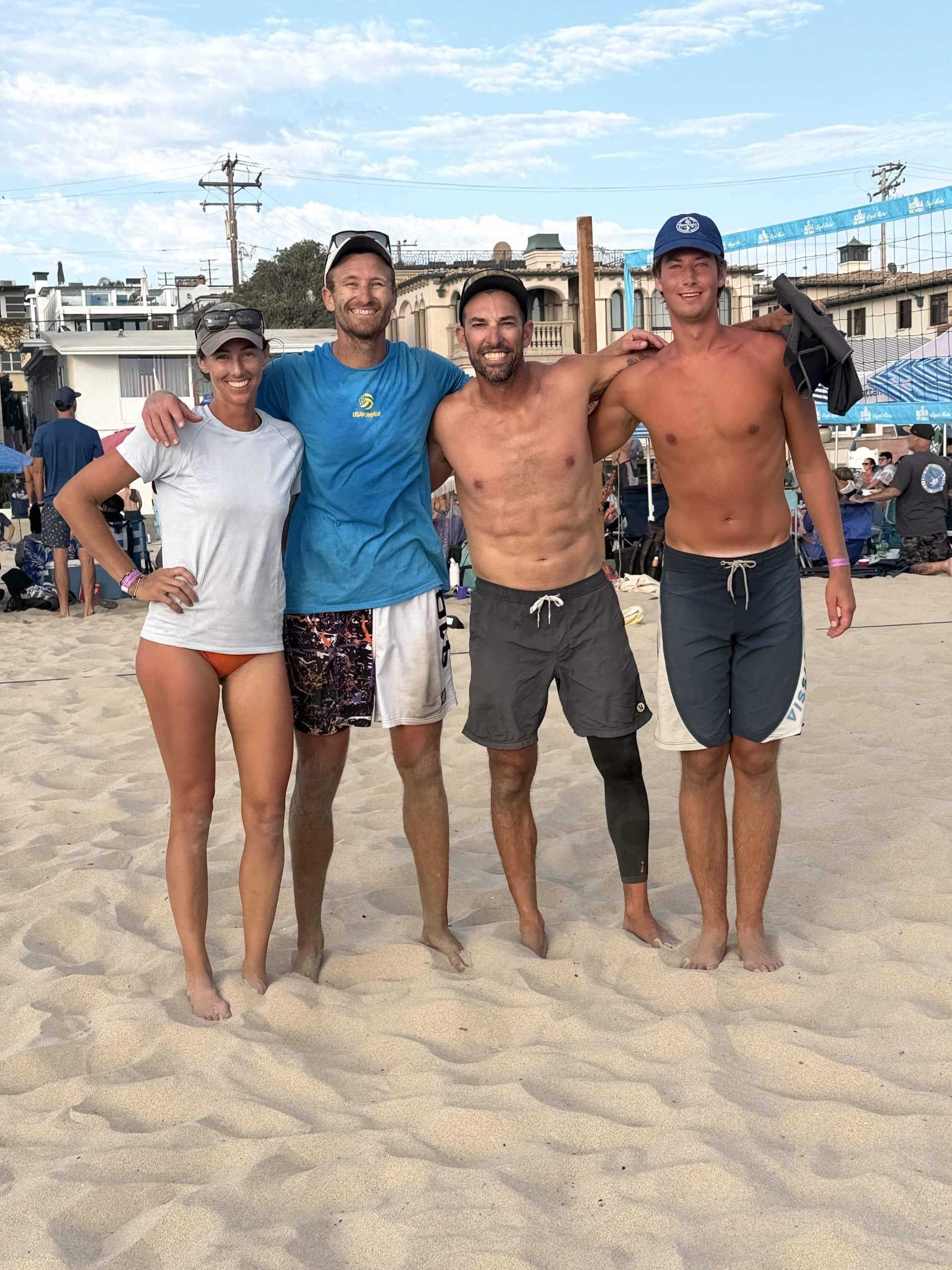
One foot stood squarely in beach volleyball’s past, occupying an endless summer day at 26th Street in Hermosa as I competed in the 57th annual Seawright Invitational, a bucket-list fours tournament that is more than a decade older than the AVP itself.
The other foot stood in beach volleyball’s rapidly changing present.
As I sat on the couch on Sunday afternoon, every muscle mangled and sore beyond a reasonable doubt, as sore as I can ever recall being in my entire career as a player, I turned on the TV to watch the second day of the AVP League in Long Beach.
The experience was not exactly jarring – jarring was what I put my body through in six matches as the solo hitter and blocker on my team – but to see and feel and witness the contrast of beach volleyball’s dueling eras in 24-hour’s time was certainly illuminating to a spectacular degree.
In Hermosa, we played sets to 11 with side-out scoring, until we reached the quarterfinals where, to the great dismay of my legs and left shoulder, we expanded it to sets to 15 (dismay or not, the expansion paved the way for an epic 3-11 comeback to push us into the semifinals; such a comeback, I feel obliged to note, is not possible in any rally format of the game, be it to 21 or 15). It wasn’t strange for eight to 10 minutes to go by without a single point being scored.
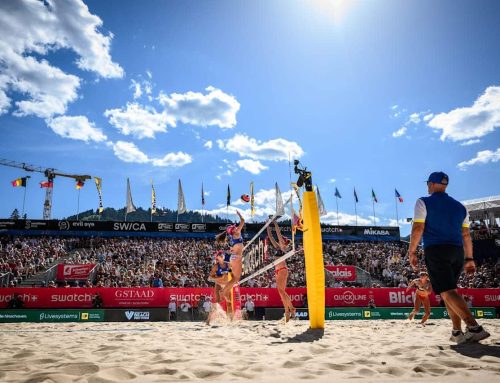
In Long Beach, within that same span of eight to 10 minutes, sets were mostly halfway finished, if not more, as was the case in Maddie Anderson and Alaina Chacon’s 15-7 first set win over Lexy Denaburg and Julia Donlin.
In Hermosa, the center court had roughly two feet of space before the crush of beach chairs and umbrellas formed a tight cocoon around the lines.
In Long Beach, there were stands and player boxes comfortably distanced from the court.
In Hermosa, beer was consumed at a rate no less than four times the consumption of water. That may be an underestimate.
In Long Beach, the most visible sponsor was Waterloo, a delicious brand of sparkling – and, notably, non-alcoholic – water.
In Hermosa, the soundtrack was an unwearying stream of heckling, laughter, mostly playful and good-natured arguing, and colorful language that made me curious what my 3-year-old son might return to the dinner table with that night.
In Long Beach, music blasted throughout.
In Hermosa, professionals mingled and played alongside individuals who had never before touched a ball. Our D, for instance, an incredibly exuberant 20-something named Bryce, had just moved here from Wisconsin. This was his first time playing in a tournament. He knew his role – to hype incessantly, serve balls over the net, and make a soul-crushing dig once or twice during the day – and filled it as perfectly as anyone could have played the role of a D. In the span of a day, he had built a community.
In Long Beach, the best in the United States were on display, and there is no better example of that than the awesome fusillade of missiles unloaded by Taylor Crabb on his home beach against the unsuspecting Paul Lotman and Miles Partain.
What’s better? Worse? More entertaining?
Where should the ghost of beach volleyball’s future head?
The old-school, grind it out, heckle till you die, pull-up-a-beach-chair-and-park-with-a-beer past, or the music-thumping, fast-paced, PG-rated, Waterloo-infused present?
You’ll find opinions – strongly held, unwavering, vocal opinions – on both extremes of the spectrum.
It certainly was something to have one foot in both.