
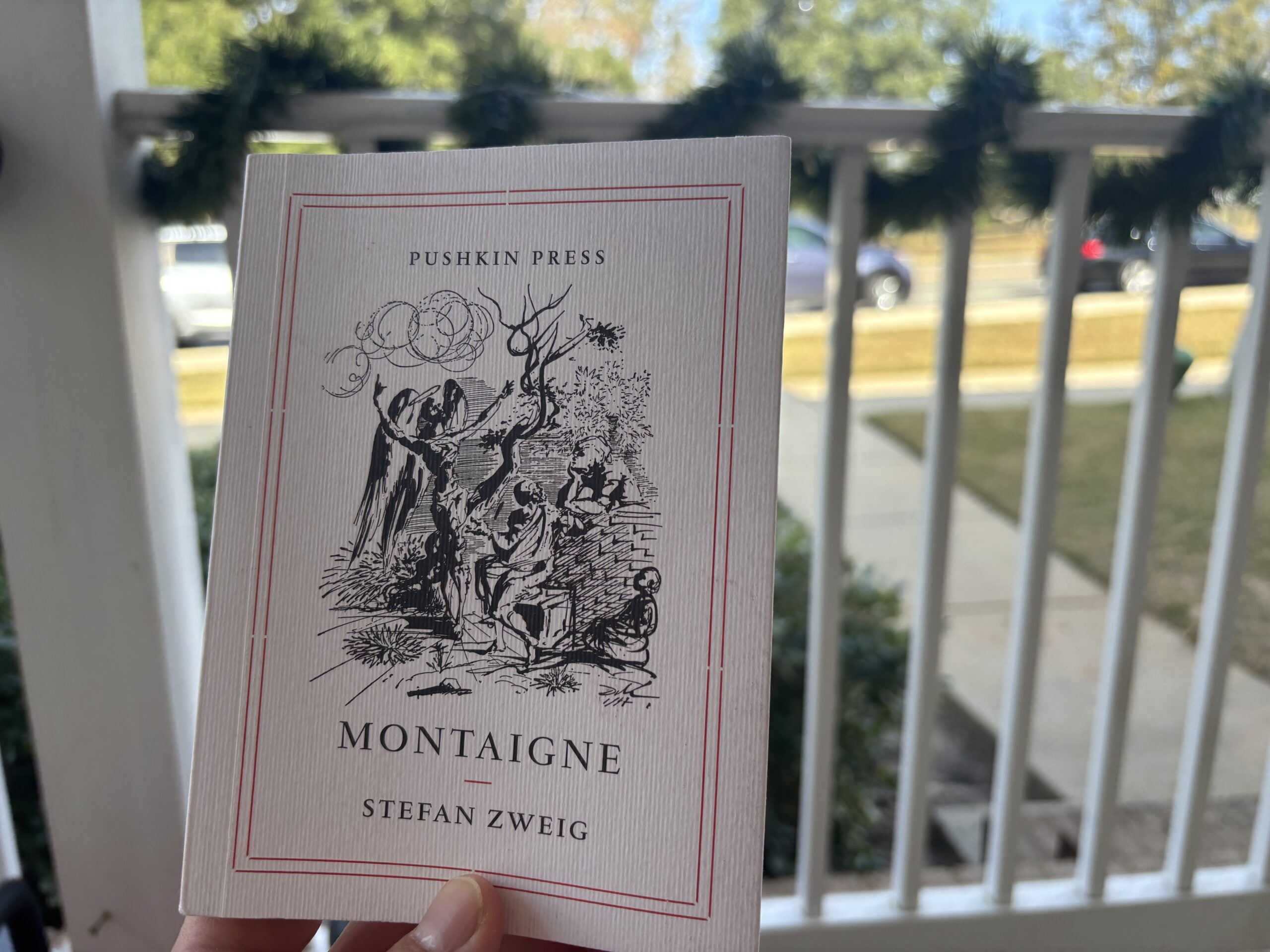
One of the few individuals I trust when it comes to book recommendations is Ryan Holiday, the prolific author and speaker and podcaster on all things Stoicism. His monthly reading list email goes, essentially, directly to my GoodReads to-read list if they haven’t been added already. One book, Montaigne, by Stefan Zweig — check it out on Amazon here if you want more info — came up over and over and over again. With a lot of travel upcoming, including a two-week trip to Australia for the 2025 Beach Volleyball World Championships, I hit buy on that one and several others.
It’s a worthy read, although it will not make my Best Books of All Time list. Like any book, I jot down notes and highlight certain sections, only now I’m just putting them here, for everyone else to benefit from my biggest takeaways as well. So enjoy, and let me know if you decide to pick it up. It’s a quick read with lovely writing and lots of lessons to learn from an interesting figure.
Notes from Montaigne, by Stefan Zweig
On living his own life
- From a million souls arose Ulrich von Hutten’s jubilant cry: “What joy it is to live!”
- He applied himself to the sole aim to which he was committed: to live his own life, and not simply to live.
- Montaigne achieved little else in his life aside from posing the question: How should I live?
- Neither position in the world, the privilege of blood nor talent makes for the nobility of man, but solely the degree to which he strives to preserve his personality and to live his own life.
- Montaigne had never done other than to obey his own will.
- Think your own thoughts, not mine. Live your life. Do not follow me blindly, but remain free. He who thinks freely for himself, honors all freedom on earth.
On not being bothered by outside opinions
- Why let yourself be so torn and traumatized by the insanity and depravity of the epoch in which you are obliged to live? All of that can only graze your skin; it cannot reach the interior self. The outside world can take nothing from you and cannot unhinge you, as long as you do not allow yourself to be disturbed.
- And even the most despairing of your affairs, the seeming humiliations, the blows of fate: you only feel them if you show weakness before them, for who, other than you, assigns to things value and weight, joy and pain? Nothing can lower or raise your self from outside; that which remains inwardly free and sincere easily defeats the strongest pressure from the exterior.
On reading
- Books are, I find, the best provisions a man can take with him on his life’s journey.
On the real joy of life: the process, and the power of action
- Montaigne’s greatest pleasure is in the search, not the discovery.
- It is in his actions that man reveals himself.
- All those who write biographies provide the tastiest dishes for me. Since they attach more value to the motive than the event, it’s more about what comes from within, rather than what happens on the outside. That’s why Plutarch is my man, before all others.
On accountability for your own errors
- I must not attempt to conceal such errors, for they are not in my case just a trend, they are my profession.
- Montaigne is always a man to recognize errors.
On having enough
- In the home, at study, hunting and all other forms of activity, one should strive for the fullness, the limits of enjoyment, but not exceed them, for then suffering begins to encroach… One should stop when the enjoyment stops.
On having direction
- Whoever wants to be everywhere is nowhere. No wind blows for him who has no harbour.
On traveling like a road dog
- For the genuine traveler, nothing is a disappointment.
- If things look ugly to the left, I turn to the right; if I feel ill when mounted, I call halt… did I miss something of interest behind me? I turn around and retrace my steps. That’s always the way I travel.
- It is real life that Montaigne explores in Switzerland and Italy. For him all life has equal value.
On his social circle, where character and merit are the only guides
- He was not attached to any king, any party, any group, and had not selected his friends for their party badge or their religious affiliations, but solely for their individual merit.


