HAMBURG, Germany – Reka Orsi Toth grew up watching her sister, Viktoria, play professional beach volleyball, and as she watched Viktoria hit the Beach Pro Tour full time in in 2014 and win her first event in 2015, the younger sister’s mission became clear: She wanted to be just like big sis.
She wanted to be a professional beach volleyball player, good enough, perhaps, to one day play alongside her older sister.
In 2022, that dream was realized, as the Orsi Toths played together for two injury-shortened seasons.
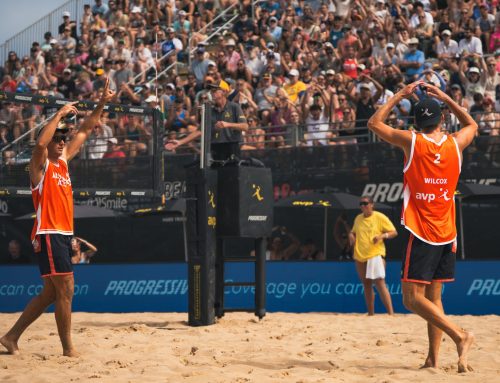
On Sunday in Hamburg, Reka took that childhood dream one step further, winning her first Elite gold medal at one of the tour’s most iconic sites, taking out the world No. 1, Victoria Lopes and Thamela Coradello, 17-21, 21-18, 15-6 in a third set that was a 45-minute display of the astonishing level at which this Italian pair can play.
“When I was growing up watching my sister play around the world, I was a little girl hoping I could play on a court like this,” Orsi Toth said after the win. “Winning here is a dream, and a dream come true.”
And it would have seemed a pipe dream, indeed, to have predicted Italy to win this tournament. They were coming off the worst finish of their partnership, a 13th-place finish in Montreal in which they didn’t win a set.
Cue Hamburg, and an entirely different team arrived, one that swept both matches in pool play then knocked off three straight German teams in the playoffs. Along the way, they earned the respect, then unadulterated admiration, from the home crowd, quickly becoming the adopted daughters of Germany.
“I love playing here in this beautiful city,” Gottardi said after a 21-19, 21-13 semifinal win over Cinja Tillmann and Svenja Muller, the top seed and defending silver medalists in Hamburg. “It’s always full of people and they always cheer for everyone, even us, when we’re not your first choice.”
In the finals, they became their first choice, and the event became something of a home tournament for the Italians. In a podium bereft of Germans for the first time in four years, Gottardi and Orsi Toth gave the fans something to cheer for, putting on a show of extraordinary beach volleyball en route to their debut gold medal.
“Last tournament in Montreal was difficult because Reka was coming back from an injury,” Gottardi said. “She showed she’s such a great player. You saw her today, she was amazing. She deserves it.”
The next line of the Orsi Toth family has officially arrived.

Volleyball World photo
Anders Mol, Christian Sorum, and the hunt for Emanuel and Ricardo
A year ago, Anders Mol and Christian Sorum claimed the solo No. 2 spot on the all-time international wins list, passing Phil Dalhausser and Todd Rogers with their 24th victory. On Sunday, they tacked on another to their total, sweeping Kristians Fokerots and Martins Plavins in the semifinals (21-12, 21-16) and Poland’s Bartosz Losiak and Michal Bryl in the finals (25-23, 21-14) that was as much a flex of their might as it was another win.
Mol and Sorum are now at 29 wins, five from tying Emanuel and Ricardo and six from surpassing the Brazilian greats.
“We’re going to fight for gold and we’re going to keep going to count down for Emanuel and Ricardo,” Mol said after their semifinal win.
It is but a matter of time. Since 2018, Mol and Sorum have won a minimum of three gold medals per season, with four already in 2025 with three events remaining on their calendar: Elites in Joao Pessoa and Rio de Janeiro in September, and the World Championships in Adelaide, Australia in November.
It won’t be this year, but with another Hamburg gold on the ledger, it is quickly becoming a matter of time before Mol and Sorum are officially crowned the greatest team of all time.
Now THAT is what Bartosz Losiak and Michal Bryl can do
Perfect was the word used by Bartosz Losiak after his semifinal win with Michal Bryl over Stefan Boermans and Yorick de Groot.
Perfect is what they have been close to sustaining for the last two events.
There is no more puzzling team than Losiak and Bryl. When they partnered in 2022, they promptly won their first tournament, a Challenge in Tlaxcala, Mexico, won three more that season and finished it with another finals appearance in the Beach Pro Tour Finals in Doha. It laid the groundwork for the future to come, with expectations of piling up gold medals and prize money by the hundreds of thousands.
They haven’t won a gold medal since.
When Bryl and Losiak are playing their best, they belong in the class of greats inhabited, currently, by Scandinavia, and this week in Montreal showed it. They knocked off Sweden’s David Ahman and Jonatan Hellvig in the quarterfinals for their first career wins over the Paris Olympic gold medalists, responding from a 15-21 first set loss to take the next two, 22-20, 15-12. Then came the “perfect” semifinal win over Boermans and de Groot, 21-15, 21-18.
It was vintage Bryl and Losiak — 2022 Bryl and Losiak.
Their final, too, was a strong display from Poland, as Losiak had a swing for the set at 20-19. It was blocked, as seven others were, and Mol and Sorum pulled away, 25-23, and then met little resistance in the second set. But the first medal has alas been won by Poland this season, as they made their first Elite final since Vienna last July.
“They are such a strong team,” Sorum said afterwards.
Yes indeed.
Volleyball World photo
Pay attention to Linda Bock
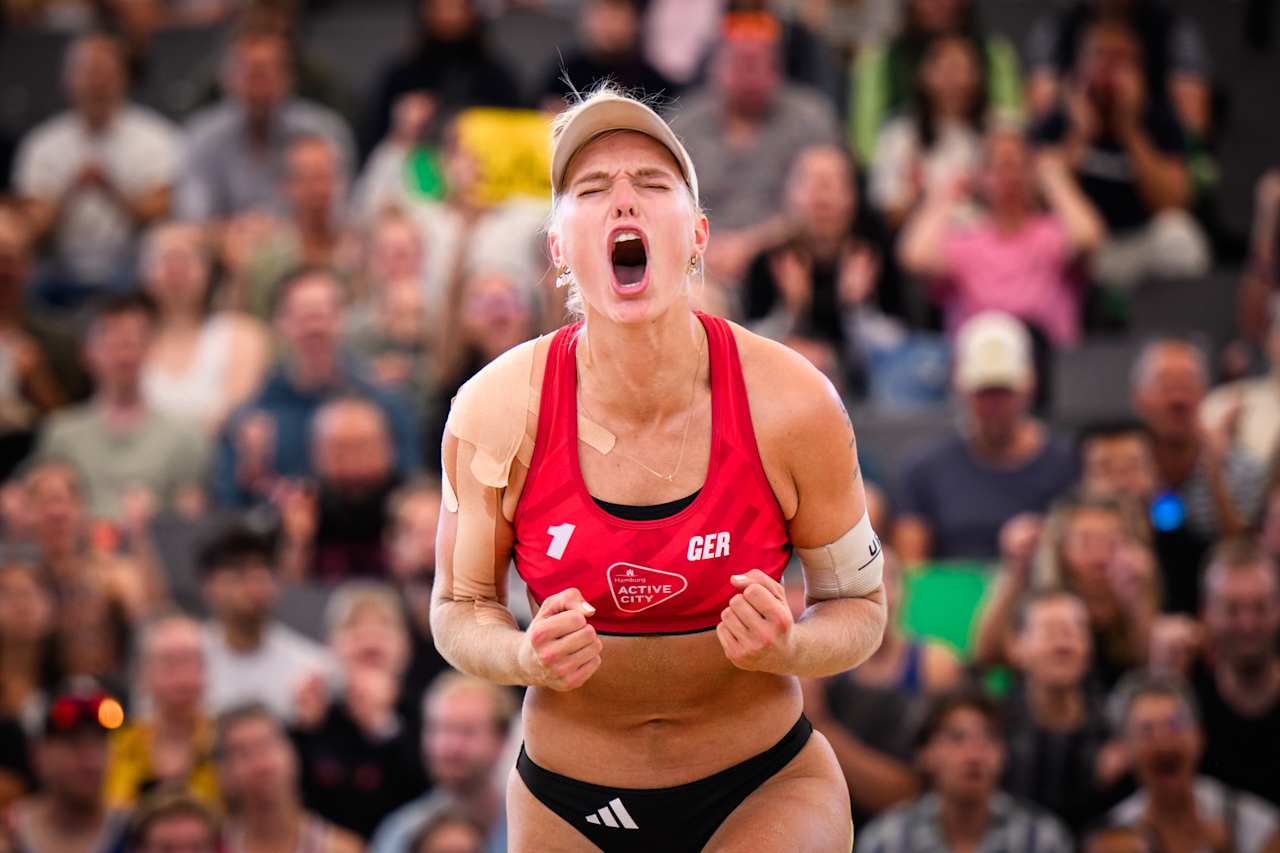
It is a shame that perhaps the best defensive performance of the season ended in a loss, but if you want to watch some bona fide sensational defensive beach volleyball, do yourselves a favor and watch the replay of Linda Bock and Louisa Lippmann’s pool play match against Brazil’s Ana Patricia and Duda.
It is bonkers, featuring rally after rally after rally that routinely left all four players gasping for breath, and sometimes they simply fell to the sand and lay there for a bit.
It was a 40-minute highlight reel for Linda Bock.
Little was known in beach circles outside Germany about the 25-year-old defender. Picked up by Lippmann after the retirement of Laura Ludwig in Hamburg in 2024, Bock had played exclusively indoors, although she did win the U17 German beach volleyball champs in 2016.
But that was nine years ago, and transitioning from indoor to beach as a professional has proven to be no easy feat.
But when you watch Bock, it is easy to know that it was only a matter of time until her and Lippmann made their ascent. They flew to the finals at the Stare Jablonki Challenge as the 20 seed, were tremendous in a sweep over Brazil’s Rebecca and Carol in Gstaad, won gold in Baden, and in Hamburg displayed the ability to push Ana Patricia and Duda in ways that are near impossible to push them.
They finished ninth in Hamburg in just their second Elite main draw – their first was Gstaad – and it would be a surprise if they do not soon make an Elite podium. When Lippmann made her debut on the Beach Pro Tour as a rookie alongside Laura Ludwig, she finished second in the Rookie of the Year voting (Valentina Gottardi won). At the moment, Bock has to be the leader by a mile.
Teo Rotar has arrived
It could have so easily spiraled out of control. Here was Teo Rotar, a 21-year-old kid on the Beach Pro Tour who for all intents and purposes is still a rookie, in that vague and undefined way young players who have competed but not yet broken through are still considered rookies.
And here was Anders Mol, putting that rookie in his place.
In the second round of pool in Hamburg, Mol, already one of the greatest blockers who has ever lived, gave Rotar no breathing room. He blocked three of Rotar’s swings before the first side switch, which caused a downstream ripple effect of errors and visible frustration. Within minutes, Norway’s lead stretched to 12-3.
There things could have continued going horribly wrong. It’s difficult for the best players in the world to recover from such a disastrous start, more difficult still when that disastrous start is against the most formidable defensive duo in the world. Yet Rotar did exactly that, displaying precocious poise. The 6-foot-7 blocker settled in, making the proper adjustments to win the second set, 21-19, and even take a 13-12 lead late in the third set. It unwound from there, with Mol and Christian Sorum scoring three straight to claim the win and top spot in pool, but the evidence was in: Teo Rotar has arrived.
He’d long been close, a can’t-miss prospect building his career through the youth and Futures and Challenge ranks with Arthur Canet. They won the 2021 U-19 World Championships, made the Cape Town Elite main draw in 2022 when they were still teenagers, consistently made podiums at every European youth event on the calendar. But his breakthrough, the one with a capital B, where he could regularly contend with and beat top-flight teams, still seemed years away.
Even at the beginning of 2025, partnered with France’s top defender in Arnaud Gauthier-Rat, it still seemed years away. Sure, they took bronze at a Challenge in Xiamen and silver at another Challenge in Alanya, but they hadn’t broken pool in an Elite and twice lost in qualifiers, in Quintana Roo and Brasilia.
In Hamburg, the capital B Breakthrough was made.
They opened pool play with a convincing win over Latvia’s Martins Plavins and Kristians Fokerots (21-17, 21-13), the latter of whom Rotar beat a week ago with Canet for the U22 European Championship gold medal. Then came a competitive loss to Norway, the closest either player has been to beating the Vikings, and a pasting of Germany’s Lui Wust and Paul Henning (21-10, 21-15) in the first round of playoffs.
When they play like that, there is little doubt they can beat any team in the world.
And Rotar is just 21.
Their ninth-place finish is hardly indicative of the excellent beach volleyball they played this weekend. Their only two losses came in three sets to the top two teams in the world in Mol and Sorum and Sweden’s David Ahman and Jonatan Hellvig, while their wins came in blowout sweeps.
Come fall in Adelaide for the World Championships, they will be dark horse contenders to podium.
Volleyball World photo
Taru Lahti, Niina Ahtiainen make breakout Elite finish
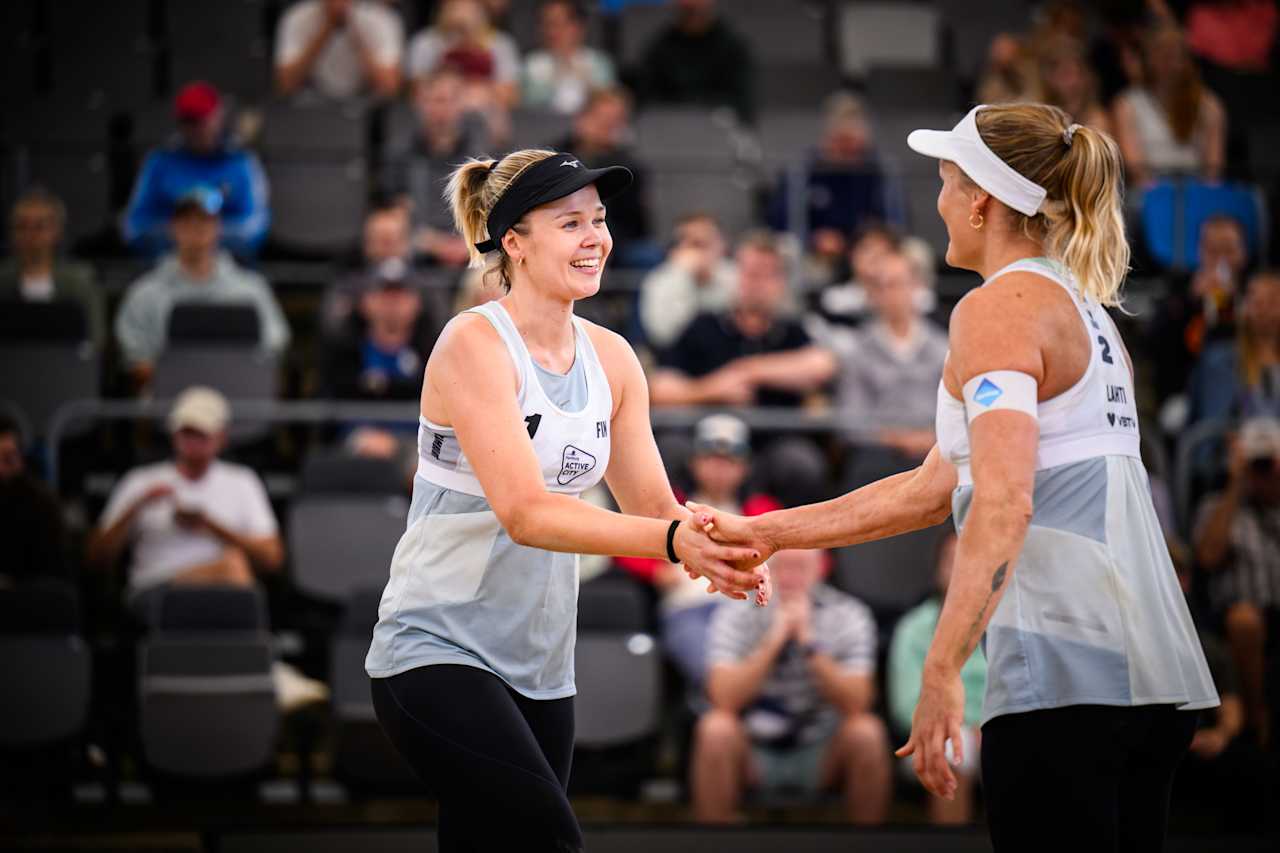
Like many teams in the wake of the Paris Olympic quad, Finland’s Taru Lahti and Niina Ahtiainen got off to a slow start in the 2025 season: four straight finishes outside the top 10 and a 4-8 match record. They came dangerously close to slipping into Challenge qualifiers. A silver at the Xiamen Challenge in April propped up their entry points, and a fourth a few months later in Baden did the same. But a truly top-flight win had eluded them.
In Hamburg, that win no longer proved elusive.
Lahti and Ahtiainen were positively dominant in pool, sweeping Raisa Schoon and Mila Konink and Brazil’s Rebecca Cavalcanti and Carol Salgado, the four seed, by such a wide margin they had the highest point differential of any team in the tournament – higher than Paris gold medalists Ana Patricia and Duda, higher than top-seeded Cinja Tillmann and Svenja Muller, higher than Thamela and Victoria, the current No. 1 team in the world. That differential pushed them into the quarterfinals after a round of 12 loss to Sandra Ittlinger and Anna Grune, and unfortunately, they had to forfeit due to injury and settle for fifth. Still, it was the breakout tournament of the season for them, and a huge finish for entry points and World Championship points heading into the final stretch of the qualifying period.
Volleyball World photo
What’s up with Sweden?
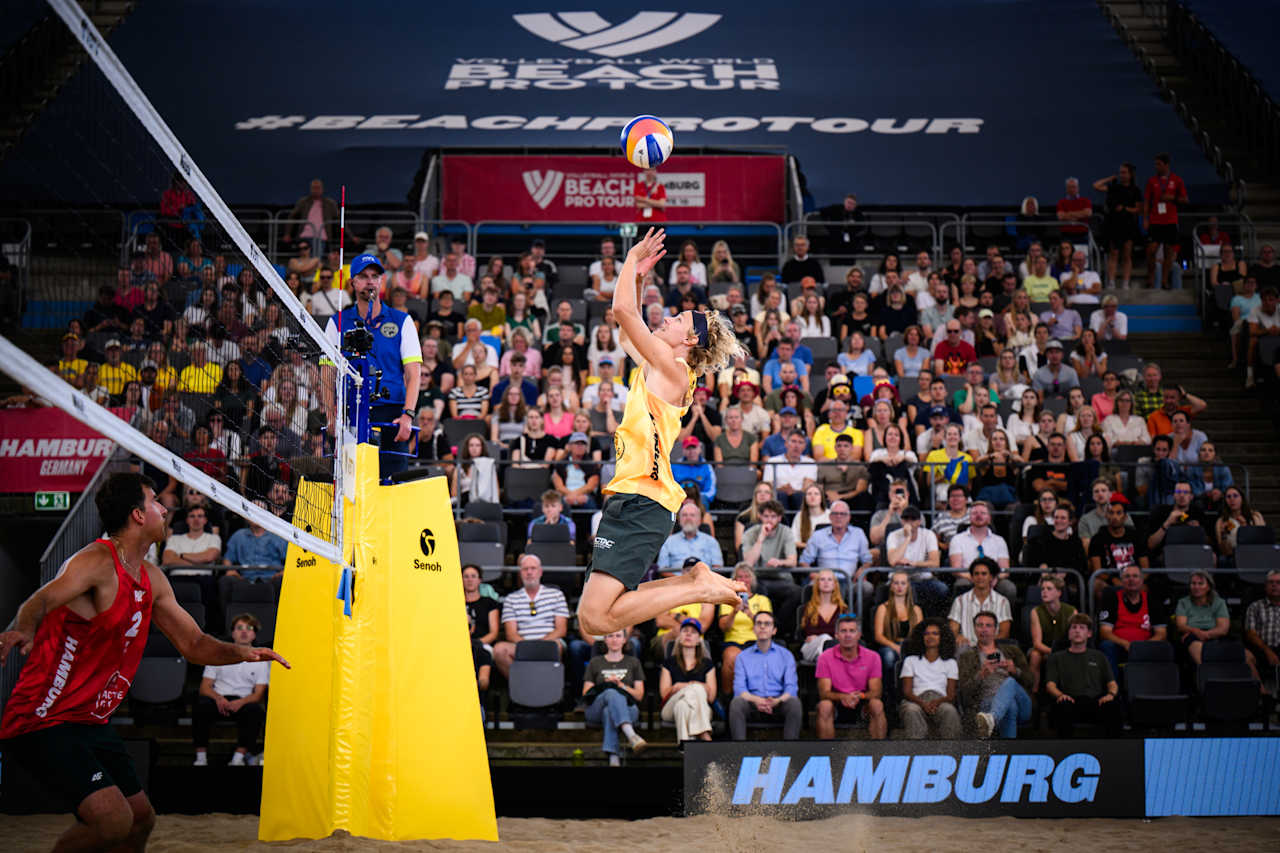
For Young Sweden, Jacob Holting-Nilsson and Elmer Andersson, nothing. They followed up three straight finals — Gstaad, Baden and Montreal — with a 3-1 record in Hamburg, that only loss coming to Stefan Boermans and Yorick de Groot in the quarterfinals. A month and a half ago, a fifth in an Elite would have been a season-high.
Now, it’s the expected minimum, and they hit it while playing well, notching wins over Evandro and Arthur and 2023 World Champs Ondrej Perusic and David Schweiner.
As for the other Sweden? The Paris gold medalists in David Ahman and Jonatan Hellvig?
It’s a complex picture.
There was a stretch, from Hamburg of 2023 to Joao Pessoa of 2024, in which Ahman and Hellvig made 11 straight finals and won five consecutive tournaments.
They’ve made just two finals in 2025, three when including the European Championships, and have only won Ostrava. For them, this is a serious drought. What’s the cause?
It is difficult to say.
Their side out percentage is nearly identical from 2024 to 2025 (71% to 70%). They’re still hitting nearly half of the errors as their opponents and Hellvig is vastly out-blocking them. The glaring dip is in their transition rate, which has dropped from 54% in 2024 to 48% in 2025. At this level, a six percent dip in any one category is a mighty drop when all else is virtually equal.
In a sport of dozens of variables, it is impossible to point to one as the solo reason Ahman and Hellvig. But they have now gone two straight tournaments suffering a loss to a team who had never before beaten them, and they have played five consecutive three-setters. Already, they have lost more matches in a single season since 2021, a year they began as teenagers seeded Q24 in four-star events.
Has it been a disastrous campaign? No, far from it. They have zero finishes outside of the top-five and are widely considered a top-two team alongside Norway’s Anders Mol and Christian Sorum. It is merely a matter of time before they return to the top of the podium.
The question is: Will it be when it matters most, in November in Adelaide for the World Championships?
Sandra Ittlinger, Anna Grune all but lock up World Champs bid
Coming into this week, Germany’s Sandra Ittlinger and Anna Grune were presented a massive opportunity to collect valuable World Championships points.
They did that and then some.
Ittlinger and Grune, coming off a ninth in Montreal, took another Elite top-10, finishing fifth at home in Hamburg, making it their third Elite top-10 in a row. It wasn’t a podium finish at home, but when viewed from the perspective of the long game of World Champs, the 760 points they picked up are as good as gold.
Adelaide will now likely feature at least three German teams: Cinja Tillmann and Svenja Muller, Ittlinger and Grune, and Lippmann and Bock.